
Lead engine and operational workflow system installation for a compliance-sensitive market.
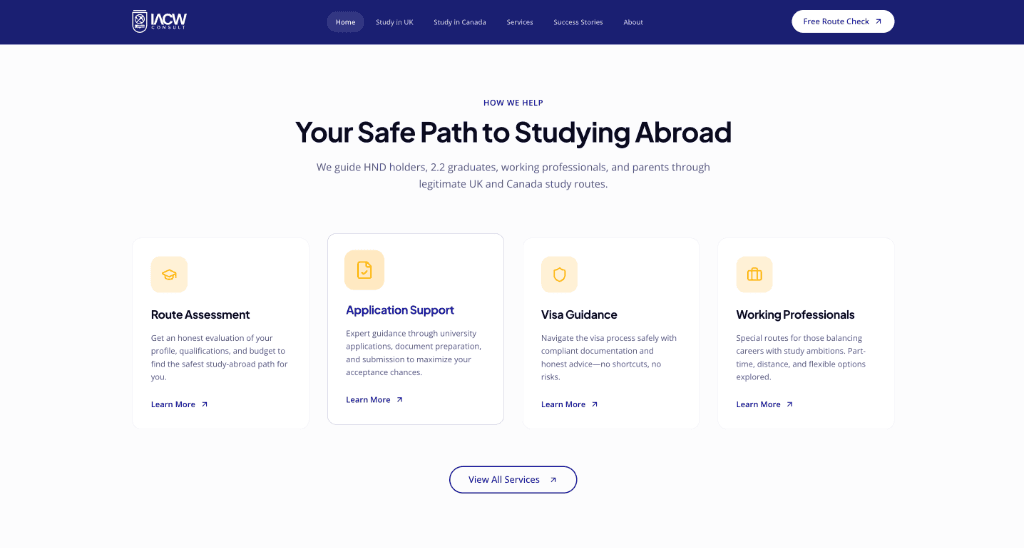
Klarnow was engaged to design and deploy a fully integrated lead generation and advisory process infrastructure for IACW, an international education consultancy operating in a trust-critical market.
The objective was to install a recurring acquisition engine for qualified inquiries while replacing fragmented manual handling with a structured, dashboard-based applicant lifecycle system.
Industry
International Education and Visa Advisory
Engagement Type
Lead Engine + Operational Workflow System Installation
Delivery Model
14-Day Structured Deployment
Status
Live and Recurring

Measured Impact
~200 qualified leads per month
Measured Impact
Route Check qualification mechanism
Measured Impact
Unified applicant dashboard
Measured Impact
Automated communication triggers
Measured Impact
Delivered within 14 days
1. Executive Overview
A scalable, visibility-driven advisory infrastructure installed in 14 days.
Within a 14-day deployment window, Klarnow delivered an integrated infrastructure that connected lead acquisition, qualification, applicant tracking, communications, and lifecycle management into one operating system.
- A recurring lead engine generating approximately 200 qualified leads per month
- A structured Route Check qualification mechanism
- A unified dashboard tracking applicants from inquiry through document submission
- Automated communication triggers reducing manual dependency
- A stage-based lifecycle management framework
The result is a system where marketing and operations run inside the same structured environment.
2. Strategic Context and Challenge
Growth without structure would have increased risk.
IACW operates in a high-trust sector where financial decisions are significant, visa application errors carry risk, documentation requirements are heavy, and reputation directly influences conversion.
- Manual inquiry tracking
- Lead fragmentation across platforms
- No unified applicant view
- Inconsistent document request follow-up
- Limited pipeline visibility
- Operational inefficiency at higher lead volume
Core Requirement
One integrated environment from inquiry to advisory finalisation.
Marketing and delivery were disconnected before the engagement. The new system closes that gap and keeps no lead outside the workflow.
3. Scope of Engagement
Dual-layer delivery across acquisition and operations.
A. Lead Acquisition Infrastructure
Designed to generate consistent, qualified demand in a compliance-sensitive market.
- Paid traffic campaign deployment
- Trust-led messaging aligned with compliance sensitivity
- Structured funnel architecture
- Route Check qualification mechanism
- Lead-to-dashboard auto-routing
B. Operational Workflow System
Installed to centralise applicant handling and create full lifecycle visibility.
- All inbound leads, including manual Instagram inquiries, routed into one unified dashboard
- Structured stage-based progression
- Automated document request emails
- Timestamped status tracking
- Role-based visibility
- Centralised pipeline overview
4. Dashboard Architecture Breakdown
The admin environment acts as a centralised control system.
Lead Intake Layer
- Sources include paid campaigns, organic content, and manual DMs or inquiries
- All entries are standardised into structured lead records
- Records are automatically logged and categorised via Route Check logic
Qualification Engine - Route Check
- Initial risk-aware eligibility screening
- Structured form input and applicant pathway logic
- Category tagging with automated data capture
- Creates a fully structured applicant profile in the dashboard
Stage-Based Workflow Engine
- Applicants move through predefined lifecycle stages
- Each stage is trackable, timestamped, and status-updatable
- Progress is visible across team roles
- Eliminates spreadsheet dependency
Automated Communication Layer
- Document submission requests
- Reminder sequences
- Stage confirmation emails
- Internal notifications
Unified Visibility Dashboard
- Total lead count and stage distribution overview
- Applicant progression tracking
- Document status visibility
- Pipeline health clarity for operational leadership
Lifecycle Stages
5. Delivery Timeline - 14 Days
Structured deployment from discovery to activation.
Days 1 to 2
- Discovery and lifecycle mapping
- Process breakdown
- Risk analysis
Days 3 to 4
- Architecture design
- Dashboard structure planning
- Route Check logic mapping
Days 5 to 7
- System configuration
- Lead capture integration
- Automation build
- Stage mapping
Days 8 to 10
- Data validation
- Manual inquiry routing integration
- Email trigger testing
Days 11 to 12
- Dashboard refinement
- User role allocation
- Performance checks
Days 13 to 14
- System activation
- Paid campaign launch
- Team onboarding
- Monitoring implementation
The system was fully operational by Day 14.
6. Risk Identification and Mitigation
Reduced ambiguity. Increased accountability.
Identified Risks
- Lead drop-off during document stage
- Manual data errors
- Compliance sensitivity
- Operational overload at scale
Mitigation Measures
- Structured stage progression
- Automated document request triggers
- Unified dashboard oversight
- Defined lifecycle visibility
7. Measurable Impact
Predictable acquisition, structured processing, and operational visibility.
- ~200 recurring qualified leads per month
- All inbound leads centralised into one system
- Reduced manual follow-up dependency
- Structured stage-based lifecycle management
- Improved pipeline clarity
- Scalable operational framework
Operating Outcome
Strategic Significance
This is infrastructure execution, not campaign management.
Need this level of structure in your own advisory or lead-handling model?
Klarnow designs systems that connect acquisition, qualification, follow-up, and operational delivery into one accountable infrastructure layer.